Mobility is essential for maintaining overall health, performance, and quality of life. It allows your joints and muscles to move freely through their full range of motion, reducing stiffness, preventing injury, and improving posture. Good mobility supports better movement patterns in everyday activities and workouts, helping you move more efficiently and with less pain. Over time, consistent mobility work enhances recovery, increases strength potential, and keeps your body functioning at its best.
Take a look at these 5 mobility tests that can be done in your own home:
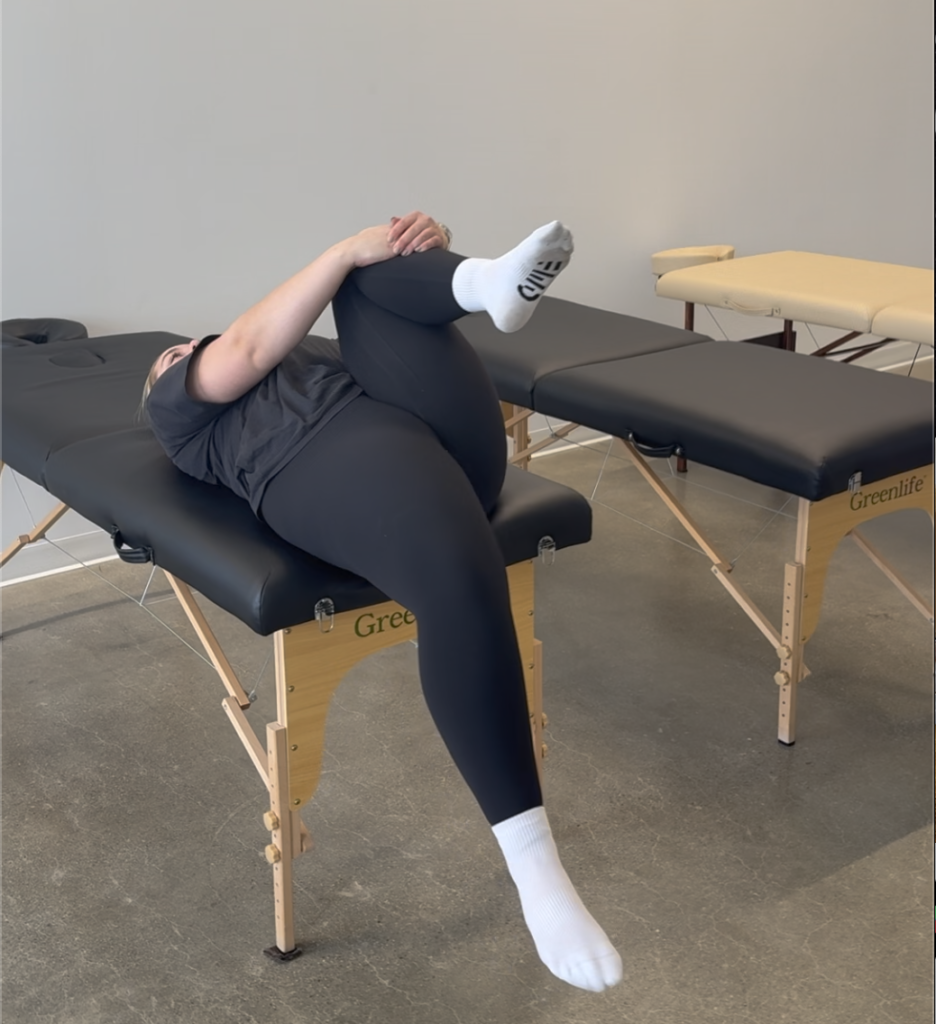
Thomas Test
The Thomas Test is a physical assessment used to evaluate the flexibility and length of the hip flexor muscles, including the iliopsoas, rectus femoris, and tensor fasciae latae. To perform it, a person lies on their back at the edge of a table, brings one knee to their chest, and lets the other leg hang freely. The position of the hanging leg indicates whether tightness or restriction is present in the hip flexors.
This test is important for mobility because tight hip flexors can limit hip extension, affect posture, and contribute to movement dysfunctions such as lower back pain or reduced performance in activities like running or squatting. By identifying these limitations, the Thomas Test helps guide targeted mobility and stretching work to restore proper range of motion and balance around the hips.
Deep Squat
The deep squat is a fundamental movement used to assess and improve full-body mobility. Performing it with your hands in front, behind your head, and overhead with a dowel challenges different areas of stability and flexibility. With your hands in front, the position helps maintain balance and highlights hip and ankle mobility. Placing your hands behind your head increases the demand on your upper back and posture, encouraging a more upright torso. When holding a dowel overhead, it adds an extra layer of difficulty by requiring shoulder and thoracic spine mobility while maintaining alignment and control through the squat.
These variations are important because they reveal where movement restrictions or imbalances may exist. A proper deep squat requires coordinated mobility in the ankles, hips, knees, and shoulders, along with strong core stability. By practicing and assessing squats in these positions, you can identify limitations—such as tight hips, restricted ankles, or poor upper-body mobility—and address them through targeted mobility work. This leads to more efficient, pain-free movement both in the gym and in daily life.

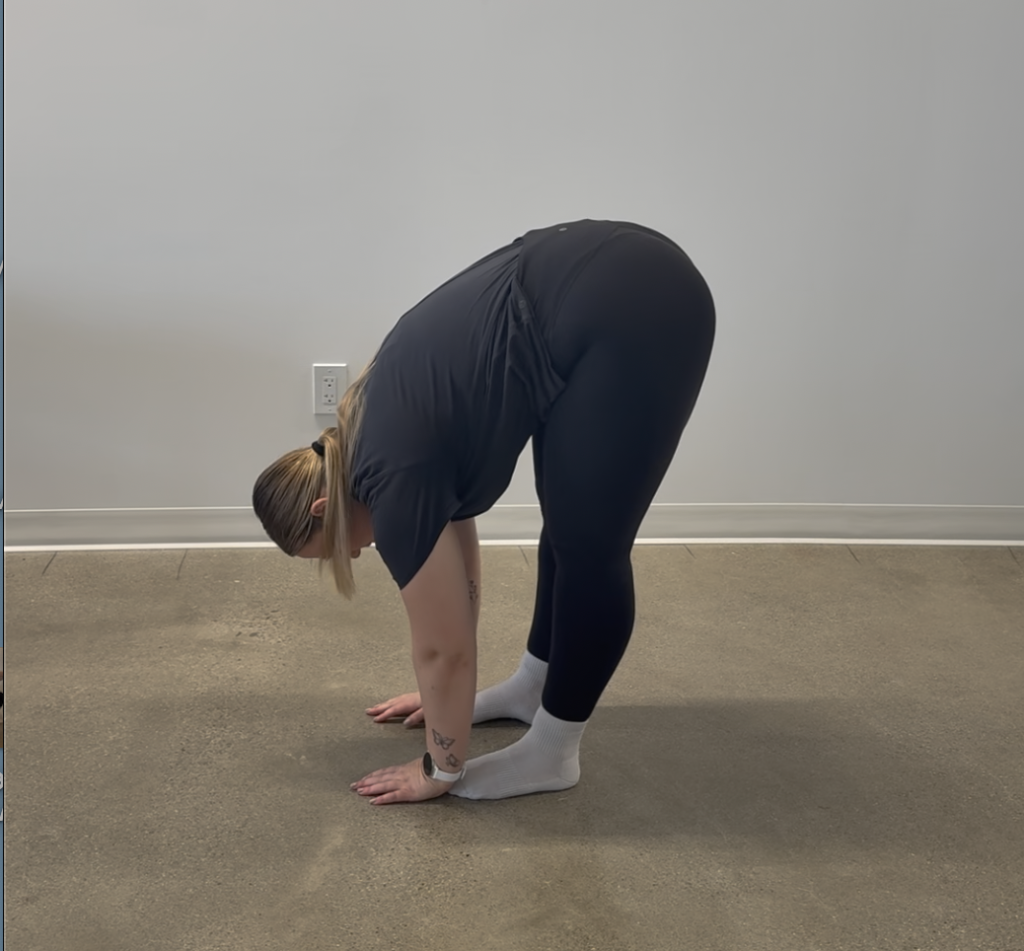
Toe Touch
The toe touch is a simple but effective movement used to assess flexibility and mobility through the posterior chain—mainly the hamstrings, calves, glutes, and lower back. To perform it, stand tall with your feet together and knees straight but not locked. Slowly bend forward at the hips, reaching your hands toward your toes while keeping your spine as long as possible. Avoid forcing the movement or rounding excessively through your lower back. Hold the bottom position briefly, then return to standing with control.
This movement is important for mobility because it tests how well your hips, hamstrings, and lower back move together. Limited range in these areas can restrict movement and increase injury risk. A proper toe touch shows good flexibility and control through the posterior chain, supporting better posture and overall movement quality.
Wall Angel
A wall angel is a mobility exercise that targets the shoulders and upper back. To perform it, stand with your back flat against a wall, feet about six inches away, and your lower back, upper back, and head touching the wall. Bring your arms up so your elbows and wrists are also against the wall, forming a “goalpost” shape. Slowly slide your arms up toward the ceiling, then back down, keeping as much contact with the wall as possible and avoiding arching your lower back.
This exercise is important for improving shoulder and thoracic spine mobility, as well as reinforcing good posture. It tests your ability to move your shoulders through their full range while maintaining core stability and proper spinal alignment. Difficulty keeping your arms or back on the wall often indicates tightness in the chest, lats, or limited thoracic extension—areas that can restrict overhead movement and contribute to poor posture or shoulder discomfort.

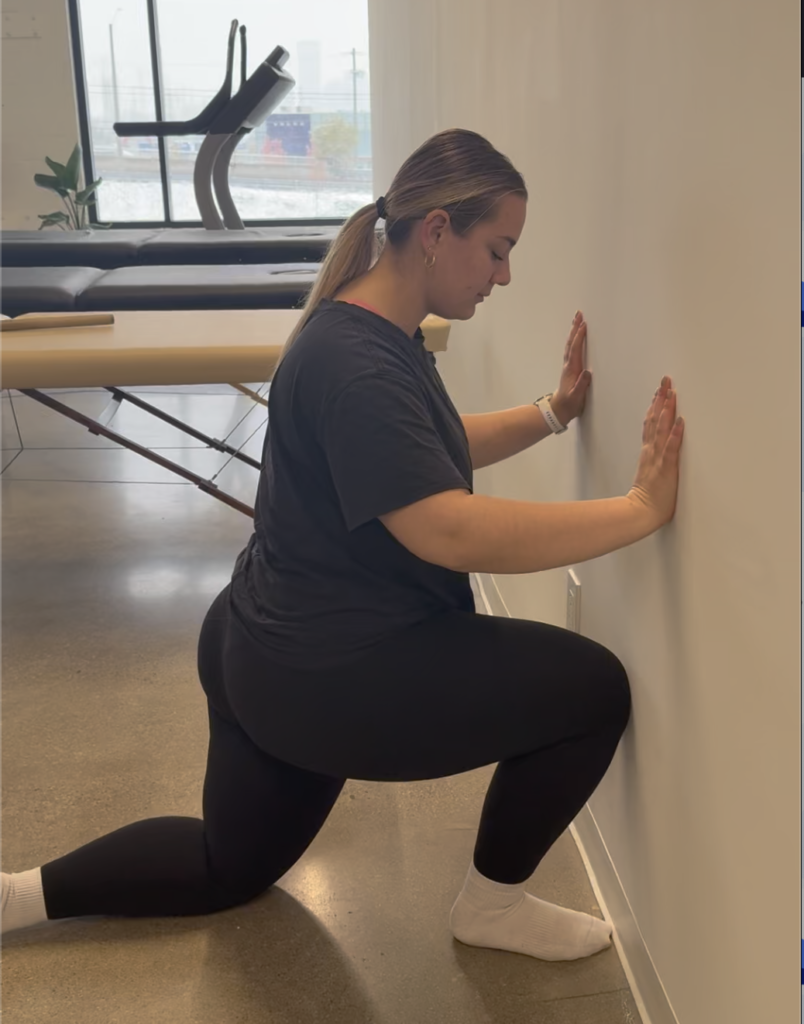
Knee to Wall
The knee-to-wall test is a simple way to assess ankle mobility, particularly dorsiflexion (the ability to move your shin toward your foot). To perform it, stand facing a wall with one foot flat on the floor and your toes a few inches away from the wall. Keeping your heel down, slowly bend your front knee toward the wall until it touches. If your heel lifts before your knee reaches the wall, move your foot closer. If you can touch the wall without the heel lifting, move your foot slightly farther back and retest to find your maximum distance.
This test is important because adequate ankle mobility is essential for proper movement patterns in exercises like squats, lunges, and running. Limited dorsiflexion can cause compensations in the knees, hips, or lower back, increasing the risk of injury. By identifying restrictions through the knee-to-wall test, you can target tight calves or joint stiffness to restore normal range of motion, improve stability, and enhance overall performance.
| Have questions? Email info@lpfit.ca or ask one of our coaches in class! |